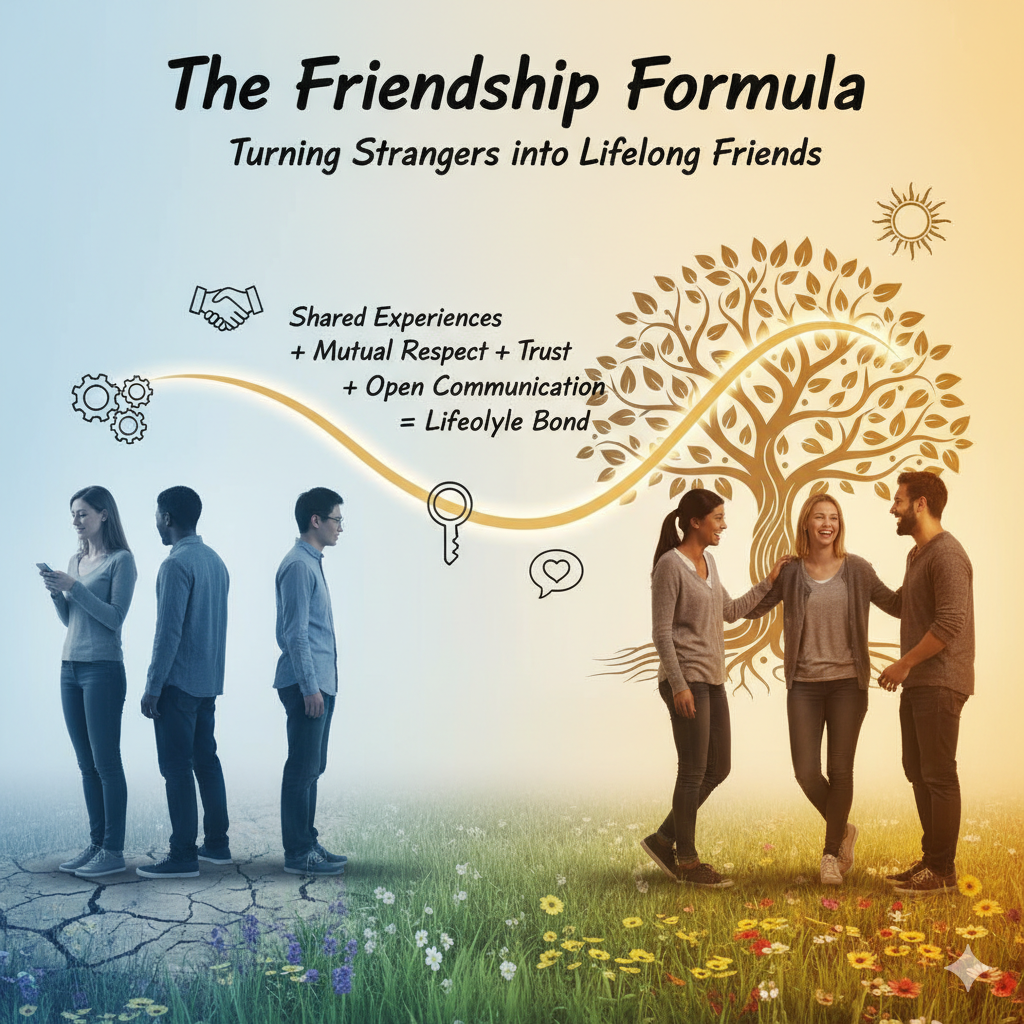
The Friendship Formula: Turning Strangers into Lifelong Friends. Let’s first understand the formula of friendship.
I’ve divided it into four parts:
1. Openness (in nature, mind, heart, and attitude)—having the courage to take the initiative and be vulnerable
2. Consistency is demonstrating love, care, and dependability.
3. Empathy—listening with the heart, not just the ears.
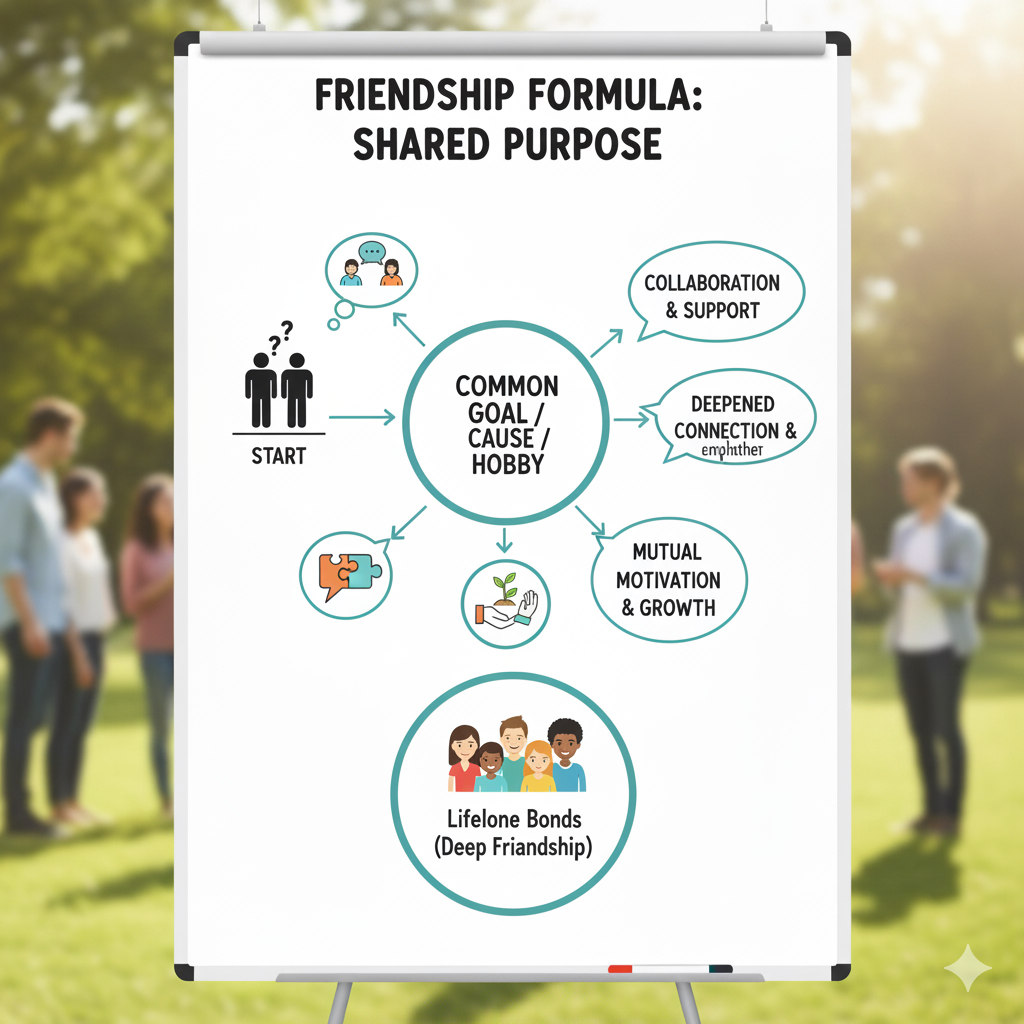
4. Shared Purpose—Creating something meaningful together and fostering a positive environment among friends, family, and society.
This formula isn’t just a principle—it’s a lifestyle, a daily commitment to live it. It requires mental strength. Today’s youth won’t grasp this prematurely. To comprehend this, young people must go beyond surface-level interactions and work hard to build friendships that inspire good deeds, heal others, and endure. Rooted in both spiritual enlightenment and practical psychology, it speaks to both believers and seekers.
As we discuss this topic, we’ll try to illustrate each element with an example. Furthermore, you will discover how to transform strangers into friends and friends into lifelong allies.
While friendship is often thought of as a feeling, it is actually a skill, a decision, and a journey for a long way. Where digital connections often replace our genuine relationships, many young people struggle to build long-lasting bonds. At the same time, the Friendship Formula offers a practical, heart-centered approach to transforming everyday encounters into lifelong friendships.
Whether you’re interacting with people in various settings, such as school hallways, playgrounds, coffee shops, conferences, marriage parties, youth groups, yoga centers, or online, this formula equips you with the knowledge and skills necessary to establish a deep connection, communicate authentically, and establish trust. Come with me to discover the friendship formula.
Openness:
The First Step in Turning Strangers into Lifelong Friends
Friendship begins with a simple yet powerful act that is openness with mind and heart. It’s the courage to say hello, to share a smile, to let someone into your world. In a society where walls of fear, judgment, and digital distractions often separate us, openness becomes the bridge that turns strangers into companions.
Openness is not just about speaking—it’s about listening, noticing, and being present. It means showing genuine interest in others, asking questions that matter, and sharing parts of yourself with humility and trust. It’s the willingness to be vulnerable, to risk rejection, and to believe that connection is worth it
When young people embrace openness, they unlock the potential for deep, lasting relationships. It breaks the ice, softens defenses, and creates space for empathy to grow. Whether in classrooms, communities, or online spaces, openness is the spark that ignites friendship.
In this journey, we’ll explore how openness can be practiced daily—through body language, words, and attitudes. We’ll learn how to recognize open-hearted people and how to cultivate this quality within ourselves.
Because every lifelong friendship starts with one open moment, and that moment could be today.
Openness: The First Step to Making Strangers Lifelong Friends
Friendship begins with a simple yet powerful act—an openness of mind and heart. Saying hello to a stranger, smiling at them, and letting them into your world takes courage. In our culture, where we often erect barriers of fear, condemnation, and electronic entertainment, transparency serves as the link that makes strangers friends.
Speaking is only one aspect of openness; others include listening and receiving, observing right and wrong words and meanings, and living accordingly in the present. It involves asking the other person meaningful questions, sharing aspects of yourself with others in a polite and trusting manner, and demonstrating genuine interest. The belief that this relationship is meaningful, a willingness to be open and vulnerable, and the possibility of facing rejection.
Young people have the opportunity to build meaningful, long-term relationships by embracing openness and sociability. It allows them to develop empathy, become aware of each other, and reduce barriers, like melting ice. Friendships are always sparked by openness, whether online, in offline communities, or at school.
We’ll learn how to demonstrate openness in our everyday lives, through words and body language. We’ll also understand how to identify open-hearted individuals and build friendships.
Because friendships last a lifetime, starting with a single, open moment. And today could be that day.
Consistency:
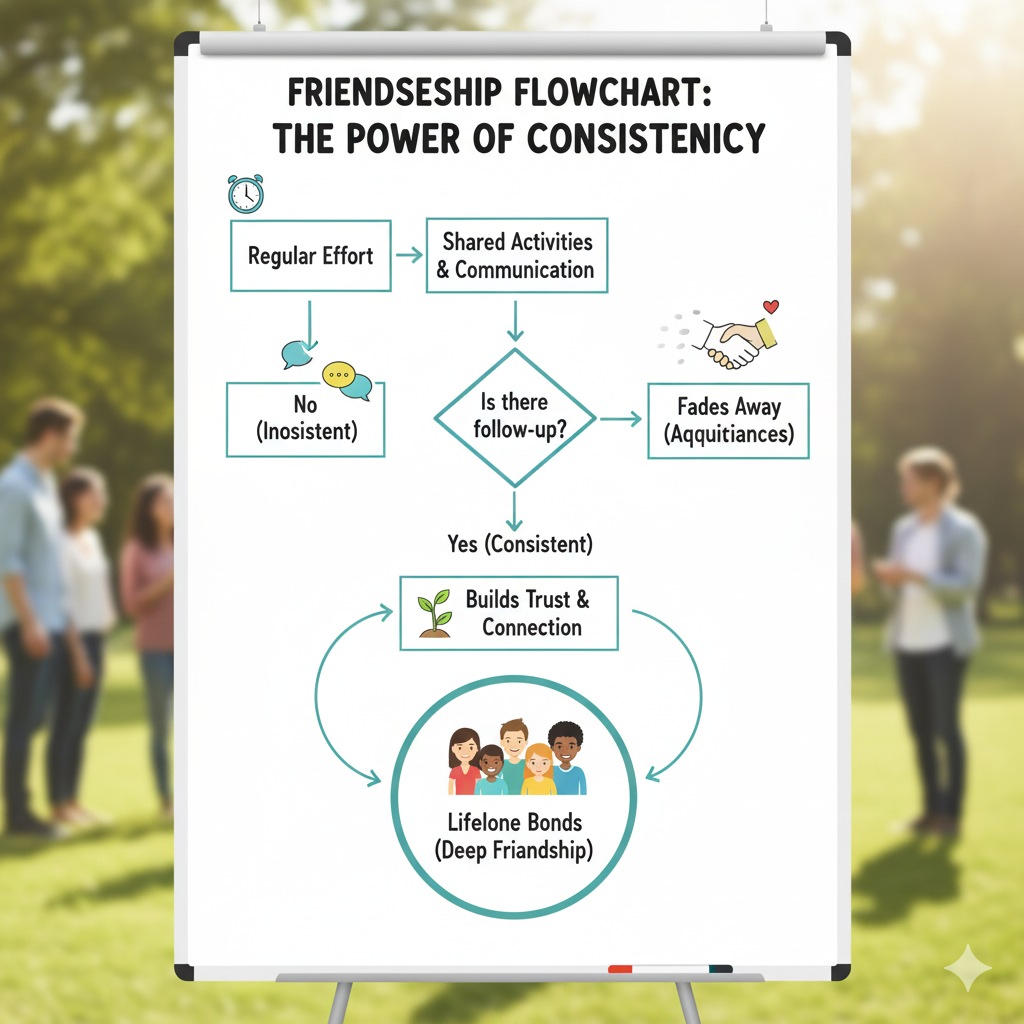
A friendship may open the first door, but consistency is the quality that keeps it open. In a world of fleeting messages and changing priorities, consistency is that rare quality that transforms casual connections into lifelong bonds.
Consistency means being present, not just once, but repeatedly. This constant connection is addressed through consistency, such as keeping the first line, remembering birthdays, responding to messages, smiling, and being present through both joys and hardships. For young people navigating friendships in today’s fast-paced, digital world, consistency is a powerful support. It sends the message, “You matter. I’m here. I won’t disappear.”
However, there is consistency; perfection is not the goal. Dependability is key. It’s all about being the kind of friend who prioritizes time despite hectic schedules and keeps their word. Small, frequent acts, such as a considerate gesture, a shared laugh, or a kind word, are what gradually foster trust.
Because it fosters the initial openness of heart, consistency is the second pillar in The Friendship Formula. Through it, acquaintances become friends and moments become memories. Instead of being a one-time event, it teaches us that friendship is an investment that lasts a lifetime.
We examine this topic and discuss how to maintain our friendships through presence, communication, and habits. Because in the end, it’s loyal deeds, not fleeting gestures, that unite strangers and create lifelong friendships.
Empathy
Empathy is the invisible thread that binds hearts together. It’s more than sympathy. It can be expressed; it’s the ability to step into someone else’s shoes, feel their emotions, and respond with compassion. In the journey from stranger to lifelong friend, empathy is the turning point where connection turns into caring.
In my opinion, by practicing empathy, we pay attention to the emotions as well as the words. We notice the pauses or steadiness in a voice, the story behind a conflict, and the silence behind a smile. Especially for young people, empathy builds bridges of understanding, trust, and harmony across differences because it’s in these times that we seek friendship.
Empathy doesn’t require expensive gestures. Offering a sympathetic ear, saying something kind, offering encouragement, or sharing tears is the first step. Saying, “You’re not alone,” I recognize you. I’m worried. In a society often characterized by comparison and criticism, empathy fosters a safe environment where true friendship can flourish.
The Maitri Sutra says that empathy transforms casual encounters into deeper connections. It teaches us how to love wisely, support, care deeply, and lend a helping hand. We may not possess this much empathy, but we should all learn to understand and lead others with empathy because when we do, friends become family and strangers become friends.
Shared Purpose