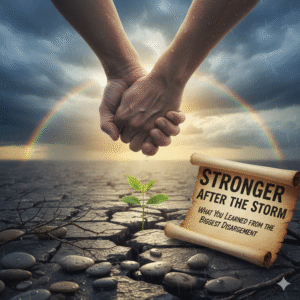
Stronger After the Storm: What You Learned from Your Biggest Differences. In this article, you’ll learn how to understand friendship, and you’ve likely experienced it well. Challenges such as social challenges, a lack of trust and confidence in each other, a sense of not belonging, an inability to give time, and difficulty in responding—many such challenges must have come your way. If not, they will surely come your way, and you should be prepared. Without challenges, friendship will never be strong.
Not all friendships survive life’s storms, as they lack trust, confidence, and mutual acceptance. You may remember how your friendships grew stronger through the storm. Perhaps it took years to build a friendship, with many ups and downs, and you may have faced misunderstandings or disagreements that could easily have shattered it. Instead of allowing the stress to fester, you decided to face it boldly. You reassured each other; while conversations weren’t easy, you may have endured social taunts and insults, and you may have experienced moments of bad feelings and disappointment.
But behind it all, we maintained a shared belief. Friendships need challenges to survive. I’ve faced many such challenges, and I’ve struggled to maintain them. And let me remind you, friendships require struggle. We learned the importance of actively listening to each other, resolving misunderstandings together, not judging a situation from the other’s perspective, and being willing to admit when you’re wrong. Remember, emerging from that conflict wasn’t about one of you “winning.” It was about both of you winning—regaining the trust, respect, and ease you’d temporarily lost. While you’re glad to have that victory again, that moment of reconciliation served as a powerful reminder of the misunderstandings between you. Today, you can see that your friendship is stronger, and true relationships aren’t about avoiding conflict but always about finding a way back to each other.
Learning to Rebuild Intimacy After a Major Conflict

If you’re married, conflict is inevitable. Life isn’t complete without conflict. Conflict brightens and shapes life. This article/topic is specifically focused on married couples. The early stages of marriage are like a delicate thread. You may have often doubted your marriage, regretting why you got married.
Those who have faced a “make or break” disagreement—a fight that threatened the very foundation of a relationship—will be happy to hear it. While I haven’t faced one like this, it’s made me wonder why I got married. It’s helped some of my colleagues immensely, as they’ve also faced similar challenges, and they’re stronger. The advice points the way. It goes beyond general conflict resolution advice and into the deeper, more sensitive work of reconnecting after conflict.
The key lesson is that when a disagreement is successfully resolved, while deeply painful, one’s own mistakes can seem less significant and the other’s seem greater or insignificant. If reconciliation is embraced, it can act as a furnace that burns away superficial issues, giving rise to a stronger, more honest bond.
In this context, it’s easier to identify the “core wound” underlying the argument and support each other whenever such challenges arise. There’s also the opportunity to learn to distinguish between hurtful words and clarifying conflict and to apologize, forgive, and let new ones grow. Important steps to making intimacy the norm for a healthy relationship will be discussed.
The emphasis is on the intimacy of shared struggle—the fact that both partners choose to stay strong in the relationship and face challenges rather than fight against each other, ultimately leading to a more resilient, trusting, and deeply connected partnership. After the storm, the relationship not only returns to normal, but it also improves.
From Boardroom Blow-Up to Strategic Alignment