New Faces: Handling Adolescent Friendship— It will be fascinating to read about how friendships evolve into new identities during adolescence. I remembered about my friend; he was, by the way, Black. More intelligent than other classmates, Nature was amiable. While we were in the eighth standard, he was a new face in the class. I assumed that he would never make friends at this school. After two months, he introduced me to his best friend in the class, who is incredibly beautiful. How did you? I asked him, surprised. She had once skipped school, he explained, and since none of her friends had shared their notebooks, I did the same the next day. It marked the start of our friendship. In adolescence, new acquaintances constantly negotiate friendship with one another through any negative interactions. It was the first time they had ever seen each other and marked the beginning of their long-lasting friendship.
Adolescent Social-Emotional Learning Non-Fiction:
This focuses on the target adolescent age group and educational goal. To help students develop the skills necessary for “navigating friendship,” social awareness, self-awareness, relational skills, self-management during the breakup, finding a new friend, and understanding the quality of friendship, social-emotional learning resources are designed to support them.
Teenage Friendship Dynamics and Conflict Resolution Guides:
The “Navigating Friendship” theme and the how-to of establishing trust, maintaining a worthy relationship, and repairing relationships are highlighted in this way. According to the teenager, relationships between people are dynamic. They frequently create their own problems due to misunderstandings, which can result in conflict before being resolved on their own. In the classroom, Teenage is excited to make friends with like-aged students.
Young Adult Non-fiction on Adolescence
Young adults, ages 12 to 18, are incredibly adaptable and open to making new friends. They are trying to find their identity and reputation, to stay in the group for a while. Growing closer and fostering friendships can also be depicted in nonfiction, and it feels right for them.
Formation of Emotional Growth

Forming friendships during adolescence can be both exciting and challenging—especially for those who are new to school, community, or social circles. Adolescence is a time of intense emotional development, identity formation, and experimentation with social norms. For newcomers, the challenge is not only finding friends but also understanding the unspoken rules of adolescent relationships and facing challenges in building trust and maintaining relationships.
Teenagers of this age often focus more on shared interests. Many form close-knit groups based on backgrounds or experiences. Joining these groups requires courage, observation, and patience. Newcomers may feel pressured to adopt certain behaviors or, if possible, to fit in with older teens. True friendships require challenges to be overcome and are based on mutual respect, understanding, and shared values. True friendships, showing empathy and interest in others’ lives, can open the door to meaningful friendships that can last a long time.
Regardless of whether or not teens have full-time mobile phones or other communication tools, social media is a way for them to easily connect. While it helps teens connect quickly, it also breaks trust quickly, which can lead to feelings of exclusion or comparison. New teens need to learn to balance online interactions with real-life engagement, understanding that likes and follows don’t always translate into true friendships, and they require in-person demonstrations. I’m worthy of a true friendship.
It’s often seen that supportive environments, such as teen and youth groups, clubs, or counseling sessions, can facilitate this transition. During counseling, they understand that everyone should be valued. Encouraging teens to embrace their uniqueness, understand it, and find peers who value it fosters trust, resilience in friendships, and emotional security.
Ultimately, newcomers thrive when they are allowed to be themselves and recognize the right to identify true friendships. Adolescent friendships are more than just popularity; they’re a time to support and share experiences, as well as to find people who see you, care about you, and accept you even when things get tough, and who grow with you. For teens navigating an unfamiliar world, every smile, shared story, and kind gesture becomes a step toward a sense of belonging.
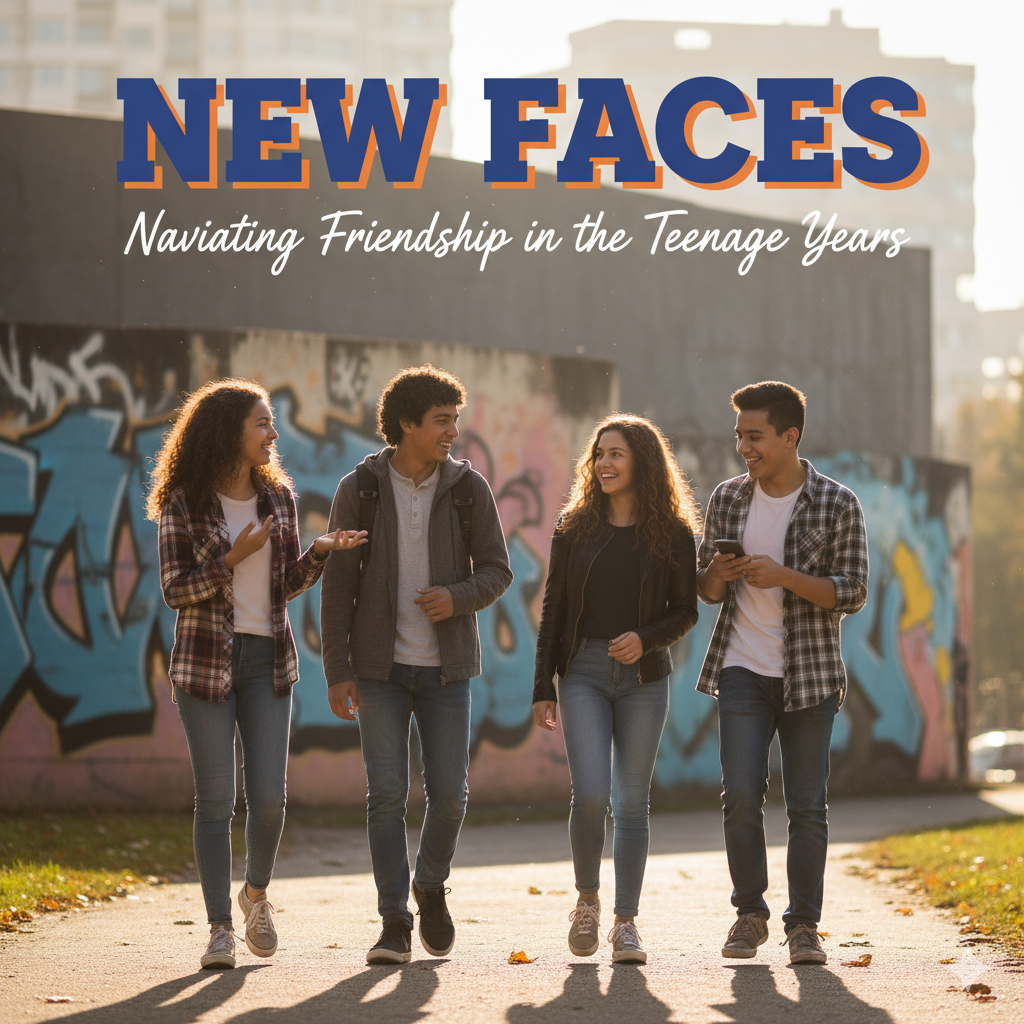
New Faces: Navigating Friendship in the Teenage Years
- Adolescent Social-Emotional Learning Non-Fiction.
- Teenage Friendship Dynamics and Conflict Resolution Guides.
- Young Adult Non-fiction on Adolescence.
- Formation of Emotional Growth.