
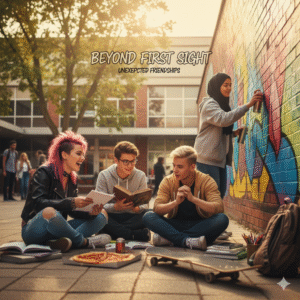
Today, we’ll explore friendships between teenagers and adolescents through “Beyond First Sight: How Unexpected Friendships Blossom in High School.” I hope you’ve read this article and understood that it’s about friendships between high school students. You know that friendships between strangers go through different stages, and you, too, have gone through different stages of friendship in your life. A friend from my early years always invited me to his birthday celebrations, including those of his kids.
We would talk a lot about our past Friendship Days in class. One thing we always remember is how we would be helped to cross the street, and we would eat together at lunch. We would share homework and notes before exams. Although we were expelled from school for a week, I still vividly remember the time we got into a fight with a high-classman and hit him. You might be reminiscing about the friendships you made in high school. It was so much fun, wasn’t it?
High school was, and still is, often characterized by social dynamics, the formation of numerous cliques, and unwritten rules for entry and control. But finding a true friend can be so difficult when surrounded by such cliques, and even today, trying to fit into a mold can make finding true companionship difficult. However, sometimes the most important and lasting relationships are the ones that surprise us. Although we tend to see ourselves in others, true growth occurs when we transcend appearances and accept the differences in those around us.
This article is about school friends. You might also enjoy reading it. This article examines the intriguing process of friendship at this age, wherein individuals with disparate personalities and backgrounds who were once strangers develop close relationships that at first glance appear unattainable. These genuine connections demonstrate how endearing and impromptu friendships can last a lifetime, and high school is a special time for everyone during the challenging adolescent years.
A Stranger’s Lunch—To Friendship
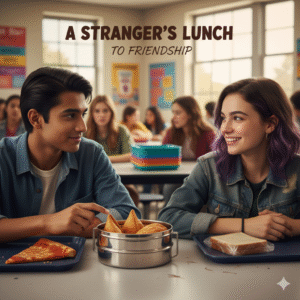
In the bustling corridors of high school, lunch is often a quiet stage for unexpected connections. One such moment occurs when a teenager, sitting alone with a simple lunch brought from home, sees another student nearby—new to school, unfamiliar, and clearly hesitant. Instead of ignoring the silence, the teenager offers a warm smile and, pushing his tiffin box a little closer, says, “Want to try this? My mom makes a great corner.” A strong friendship is established when this small gesture—combined with an open smile and a courteous gesture, but a strong, friendly pull—breaks down the imperceptible barrier between strangers.
The new student takes a bite, surprised but appreciative. He then offers her his tiffin after opening it, and the intimacy starts. They ask each other their names and “Are you from Kanha?” and form a bond over soggy sandwiches or spicy pickles and common interests like memes, music, or challenging math problems. A quiet lunch that develops into a daily routine. The tiffin, which is occasionally shared and occasionally traded but always valued, eventually comes to represent friendship and trust.
This deed of compassion fosters a sense of belonging in addition to satisfying hunger. In a society where teenagers frequently feel ignored or misinterpreted, sharing food turns into a means of communicating empathy. It teaches that friendship isn’t always loud or dramatic; sometimes it’s as simple as smiling and offering a spoonful of rice. And that’s when two strangers start their journey—from unfamiliar faces to dependable friends.
The Friendship From a Note Copy